Best Bedtime Books for Kids in 2026: Stories That Actually Wind Them Down
Sorted by age and chosen for one job: getting your kid drowsy.
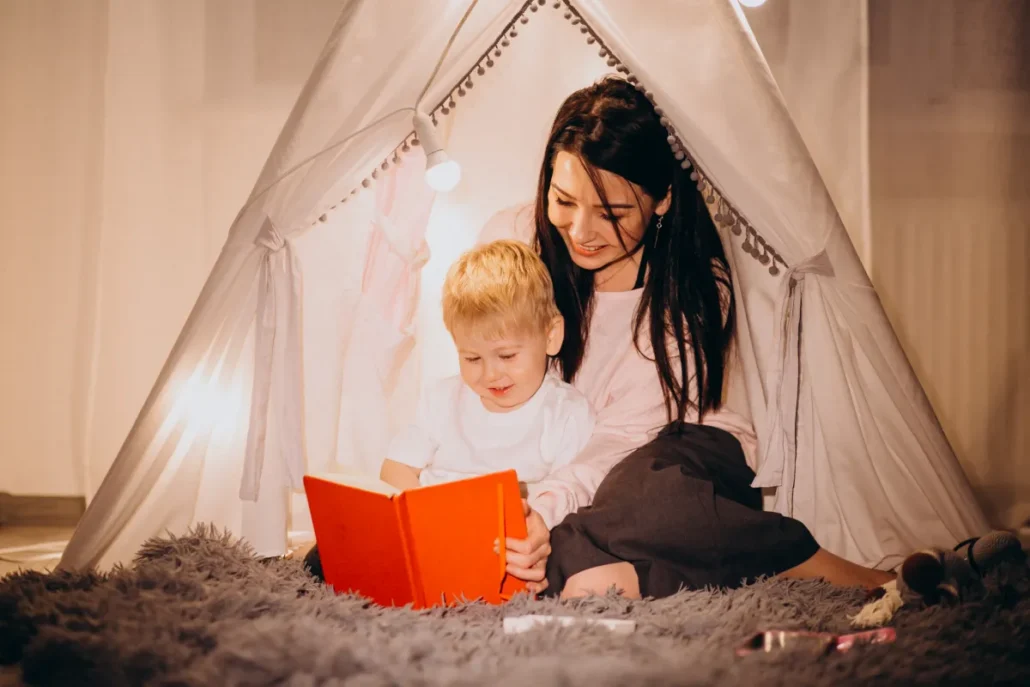
Have you ever finished a bedtime story only to watch your four-year-old bounce out of bed more energized than when you started? You picked a book, you read it beautifully, and somehow the room got louder.
You’re not alone and it’s usually not the reading. It’s the book. Some children’s books are built to rev kids up: fast plots, big laughs, surprise endings, illustrations that beg to be pored over. Wonderful books! Terrible bedtime books.
The stories that work at bedtime share a few quiet qualities: gentle pacing, repetition your child can predict, and an ending that settles rather than surprises. In this blog, we’ll cover why the bedtime story earns its place in the routine, what makes a book sleep-friendly, age-by-age picks worth reaching for in 2026, and how to read them so they actually work. Let’s dive in!
Why the Bedtime Story Earns Its Place in the Routine
Reading aloud isn’t just a sweet way to end the day it’s one of the most well-supported habits in children’s health.
The American Academy of Pediatrics recommends shared reading starting at birth and continuing at least through kindergarten, pointing to benefits for language, attention, self-control and planning skills, school readiness, and the parent-child bond. One of the AAP’s own suggestions: make books your bedtime routine, and use them to connect and wind down after a busy day.
That connection is the part parents tend to underrate. As sleep educator Terry Cralle, MS, RN explains, grownups may see bedtime as a much-needed break, while the little ones are craving time with their parents which is why a book beats a screen twice over. Our post on story-based routines for a calmer night has more of her guidance, plus the research on why consistency matters so much.
Fast Stat: A Better Sleep Council survey of 1,000 U.S. parents of children ages 3 to 18 found that kids who don’t use smartphones or tablets before bed on school nights were 1.8 times more likely to be excellent sleepers than poor sleepers.
The AAP prioritizes print books for young children, too, noting that touchscreens tend to be passive, solitary experiences that don’t build the same back-and-forth connection. There’s a sleep reason as well our post on how reading before bed improves sleep covers what screens do to sleep onset.
What Makes a Book Sleep-Friendly
Before the list, here’s the filter we used. Look for:
- A calm ending. The story should land somewhere restful asleep, home, safe not on a cliffhanger.
- Gentle stakes. Mild problems, gently resolved. Save the dragons-and-danger books for daylight.
- Predictable structure. A refrain, a countdown, a repeated phrase predictability lets a sleepy child anticipate what’s coming.
- Quiet illustrations. Muted palettes and uncluttered pages, not spreads that invite ten minutes of searching.
- Short, or breakable into pieces. Self-contained chapters give you a natural place to stop without a fight.
Pro Tip: The best bedtime book is one your child will actually sit still for. If a beloved silly book is the only thing that gets them into pajamas, read it first then close with something calmer. And treat the lists that follow as suggestions, not endorsements: these titles were chosen for their pacing, tone and bedtime-friendly qualities, and every child is different, so pick the books that work best for your family.
Babies and Toddlers (Ages 0–2)
At this age, rhythm matters more than plot. Listed alphabetically:
- A Book of Sleep by Il Sung Na (2009): Spare text and deep night-blue art as every animal settles except the owl.
- The Going-to-Bed Book by Sandra Boynton (1982): Short rhyming couplets ending on a rocking ship. Under two minutes, and endlessly rereadable.
- Goodnight Moon by Margaret Wise Brown, illustrated by Clement Hurd (1947): The original wind-down litany. The room dims page by page, and so does your toddler.
- Guess How Much I Love You by Sam McBratney, illustrated by Anita Jeram (1994): A quiet call-and-response that trails off as Little Nutbrown Hare fades into sleep.
- Hush! A Thai Lullaby by Minfong Ho, illustrated by Holly Meade (1996): A Caldecott Honor book shaped like an actual lullaby, built around a repeated shushing refrain.
- The Night Is Deep and Wide by Gillian Sze, illustrated by Sue Todd (2021): A board book of soft, repetitive lullaby lines short enough for the very youngest listeners.
- Ten, Nine, Eight by Molly Bang (1983): A countdown from ten to one that walks a child straight down into sleep.
- Time for Bed by Mem Fox, illustrated by Jane Dyer (1993): Animal parent-and-baby couplets, each closing on the same soft refrain.
Preschoolers (Ages 3–5)
Now your child can follow a story and stall like a professional. These reward attention without winding them up. Listed alphabetically:
- A Bed of Stars by Jessica Love (2023): A parent helps a child make peace with the bigness of the universe. Calm, warm, and quietly reassuring.
- Bedtime for Bo by Kjersti Annesdatter Skomsvold, illustrated by Mari Kanstad Johnsen (2022): A Kirkus-starred favorite that turns the whole bedtime routine into imaginative play a great pick for a resistant kid.
- Dream Animals: A Bedtime Journey by Emily Winfield Martin (2013): Soft dream imagery with no plot tension at all.
- Goodnight, Goodnight, Construction Site by Sherri Duskey Rinker, illustrated by Tom Lichtenheld (2011): Each truck powers down in turn a predictable shutdown sequence for kids who love machines.
- Grandfather Twilight by Barbara Helen Berger (1984): Nearly wordless in feel. One deliberate task, carried out slowly, until dusk falls.
- Little Owl’s Night by Divya Srinivasan (2011): Reframes nighttime as friendly rather than scary, and ends with the owl falling asleep at dawn.
- Llama Llama Red Pajama by Anna Dewdney (2005): Names bedtime separation worry out loud, then resolves it with a hug. Reassurance in rhyme.
- The Napping House by Audrey Wood, illustrated by Don Wood (1984): A cumulative, almost hypnotic rhythm as the whole household piles into one bed.
- On the Night You Were Born by Nancy Tillman (2006): A slow “you are loved” cadence. Hard to read fast, which is the gift.
- Sleep Like a Tiger by Mary Logue, illustrated by Pamela Zagarenski (2012): A Caldecott Honor book that turns “I’m not sleepy” into a drowsy tour of how animals sleep.
- This Land Is a Lullaby by Tonya Simpson, illustrated by Delreé Dumont (2024): A bilingual English and Plains Cree lullaby, warm and unhurried from first page to last.
- Time for Bed, Old House by Janet Costa Bates, illustrated by A.G. Ford (2021): A boy on his first sleepover at Grandpa’s puts the house to bed. Expertly paced and genuinely drowsy-making.
Early Elementary (Ages 6–8)
Longer attention spans, same rule: land softly. Listed alphabetically:
- Bedtime for Frances by Russell Hoban, illustrated by Garth Williams (1960): A gently funny portrait of a badger who will not go to sleep.
- Frog and Toad Are Friends by Arnold Lobel (1970): Five short, low-stakes stories. Read one and stop no cliffhanger to argue about.
- Goodnight, Starry Night by Joseph Coelho, illustrated by Allison Colpoys (2024): Bedtime poems inspired by works of art, built on repetition and rhythm.
- My Father’s Dragon by Ruth Stiles Gannett (1948): Tidy episodic chapters and mild adventure, with clean stopping points every night.
- Owl Moon by Jane Yolen, illustrated by John Schoenherr (1987): A Caldecott Medal winner about walking into the winter woods at night. Silence is the whole subject.
Read-Aloud Chapter Books (Ages 8–12)
Older kids still love being read to they just won’t always admit it. A chapter a night is a beautiful ritual. Listed alphabetically:
- Because of Winn-Dixie by Kate DiCamillo (2000): A quiet, warm first-person voice that moves slowly on purpose.
- Charlotte’s Web by E. B. White (1952): Unhurried barn-season pacing and long lyrical passages made for reading aloud.
- The Tale of Despereaux by Kate DiCamillo (2003): Very short numbered chapters and a storyteller who speaks directly to the reader.
- The Wind in the Willows by Kenneth Grahame (1908): Some of the drowsiest prose in the English language stick to the riverbank chapters and save the Toad Hall commotion for daytime.
- Winnie-the-Pooh by A. A. Milne (1926): Self-contained chapters, no cliffhangers, and humor that never spikes. Works as a read-aloud well below the upper end of this range.
How to Read It So It Actually Works
The right book helps. How you read it helps more. Here’s the sequence, in the order you’d use it:
- Offer two books, not the whole shelf. Cralle’s fix for stalling: give kids a small, bounded bit of control. “This one or this one?” ends the negotiation faster than “which book do you want?” and don’t worry if they pick the same book all week, because familiarity is the point at bedtime.
- Let the light drop as you go. Start with the lamp on, finish with it dimmed. Our guide to lighting for sleep covers the details.
- Slow down on purpose. Aim for about half the pace you’d use during the day. Don’t be surprised if it settles you, too.
- Praise the routine itself. Cralle suggests telling kids they’re really good at the bedtime routine and taking any chance you get to teach them the cause and effect of sleep: it’s how they recharge, fight off germs, learn, and feel strong, brave and ready to take on the day.
- Finish the same way every night. One book, one hug, one phrase. The predictability is what ends the nightly negotiation.
Try It: Bedtime is allowed to be fun. Cralle’s ideas for keeping it light: read the story by flashlight, let your child pick out your pajamas, do the whole routine walking backwards, invent a secret goodnight handshake, or say goodnight in rhyme. Then close with her favorite “name three things,” where everyone names three good moments from the day. She has a friend who’s written her family’s down for years. Imagine looking back on those.
Caution: If your child regularly has trouble falling or staying asleep, snores loudly, or seems unusually tired during the day, talk with your child’s healthcare provider. A consistent bedtime routine can support healthy sleep, but it’s not a substitute for medical guidance.
Worth checking, too: the bed itself. Kids grow, and mattresses wear out most are ready for replacement around the seven-year mark. Take the Better Bed Quizzz to Find Your Perfect Mattress!
The Last Page Is the Best Page
You don’t need a shelf full of new releases. You need three or four books your child loves, a lamp turned low, and the willingness to read Goodnight Moon for the four-hundredth time.
Pick one from your child’s age group tonight and see how the room feels by the last page. One small change at a time and before long, the story becomes the signal.
Here’s to cozy nights and easier bedtimes ahead!
With thanks to Terry Cralle, MS, RN, certified clinical sleep health educator, for the bedtime routine guidance in this post.
This blog offers general information about sleep and is not meant to replace professional medical advice. Always seek the advice of your physician or other qualified health provider with any questions you may have about your child’s sleep or health.