How Reading Before Bed Improves Sleep: The Simple Wind-Down Habit That Actually Works
Fifteen quiet minutes with a book might be the easiest sleep upgrade you make this year.
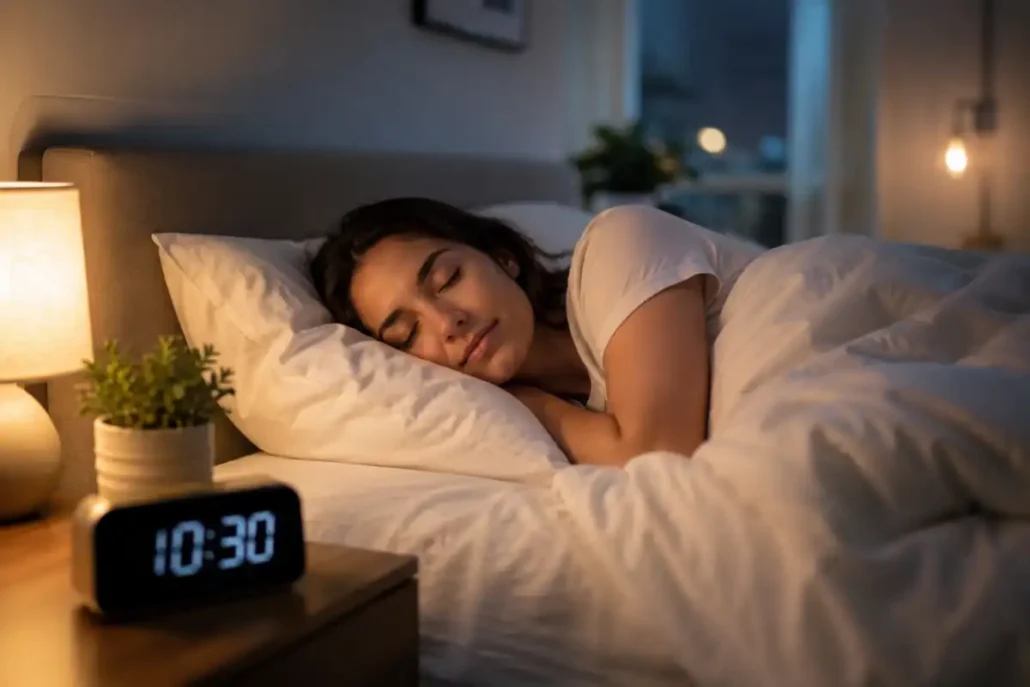
Think back to the last time you fell asleep with a book on your chest. No alarm-scrolling, no half-watched episode, no lying there mentally rewriting an email you already sent just a story, a lamp, and your eyes getting heavy.
That’s not nostalgia talking. Reading before bed is one of the most reliable, most affordable wind-down habits we have, and researchers have actually put it to the test. If your nights lately look more like doomscrolling than storytelling, you’re not alone but the fix is smaller than you’d think.
In this blog, we’ll explore what the research says about reading as a pre-sleep habit, why paper beats a glowing screen, how to build a reading ritual that sticks, and which books to save for daylight. Let’s dive in!
Yes, Someone Actually Studied This
Here’s the fun part: reading before bed isn’t just cozy folk wisdom. It’s been tested in a randomized trial.
In 2021, researchers published The People’s Trial a public-designed study also known as The Reading Trial in the journal Trials. They randomly assigned 991 adults either to read a book in bed for 15 to 30 minutes before sleep, or not to read in bed at all, for seven nights. Among participants who reported back, 42% of the reading group said their sleep quality improved, compared with 28% of the non-reading group.
That’s a meaningful gap for a habit that costs nothing and takes fifteen to thirty minutes.
Fast Fact: The researchers estimated the true difference was likely somewhere between 8 and 22 percentage points modest, but real, and pointing in one clear direction.
The Sleep Foundation reaches a similar conclusion, noting that people who read before bed generally sleep better, wake less often during the night, and sleep longer than people who head to bed without reading.
Why Reading Works: Three Things Happening at Once
So what’s going on between “open book” and “out cold”? A few things, and they stack.
- It crowds out the worry loop. This is the big one. Lying in the dark with nothing to occupy your mind is an open invitation for tomorrow’s to-do list to move in. A 2002 study of 41 adults with insomnia by Harvey and Payne in Behaviour Research and Therapy found that giving people an engaging mental image to focus on before sleep led to shorter sleep latency the amount of time it takes to fall asleep and fewer distressing pre-sleep thoughts than either a general distraction task or no instructions at all. Their explanation: an absorbing task takes up enough mental room that worries can’t get a foothold. Reading works on the same principle.
- It lowers physical arousal. Sitting still with a book slows your heart rate and lets your muscles let go of the day’s tension, according to the Sleep Foundation. Your body reads that stillness as a signal that the day is closing.
- It’s a cue your brain learns. Do the same calming thing at the same time each night and your brain starts treating it as a countdown. Cleveland Clinic lists staying consistent same sleep time, same wake time, weekends included among its tips for falling asleep faster. Reading is one of the easiest cues to keep consistent, because you can do it anywhere.
Want the bigger picture on what your body is up to once you drift off? Our guide to what your body does at night breaks down the sleep stages in plain language.
Paper vs. Screen: This One Isn’t Close
If reading is the habit, the format still matters and here we’ll take a strong stance. For bedtime, choose a printed book.
A 2015 study by researchers at Brigham and Women’s Hospital and Harvard Medical School, published in the Proceedings of the National Academy of Sciences, compared 12 adults reading on a light-emitting e-reader versus a printed book before bed across a two-week stay in a sleep lab. On the e-reader nights, participants took nearly 10 minutes longer to fall asleep, got significantly less REM sleep (the dream-heavy stage tied to memory and emotional processing), and were sleepier and slower to feel alert the next morning.
The culprit is blue light, which suppresses melatonin the sleep hormone that tells your body night has arrived.
- Best choice: a printed book. No light output, no notifications, no rabbit holes. Nothing to compete with sleep.
- Second best: an e-ink reader with the frontlight turned down. E-ink screens don’t blaze the way tablets and phones do, and warm-light settings help. It’s a reasonable compromise, not an equal one.
- Skip: phones and tablets. Even on a reading app, you’re one notification away from being wide awake. The Sleep Foundation is direct about this: traditional paperbacks and hardcovers are the better bedtime choice.
If your phone is the real obstacle, our digital detox plan walks you through unwinding the habit a day at a time, and our post on technology and sleep covers setting boundaries that hold.
Hint: Audiobooks are lovely and can absolutely help you unwind, but the Sleep Foundation notes they don’t appear to deliver the same benefit as reading. If you use one, set a sleep timer so it stops on its own.
How to Build a Reading Ritual That Sticks
The goal isn’t to finish more books. It’s to give your brain a soft landing. Here’s how to set it up, in the order we’d actually do it.
- Pick your time and protect it. Start 20 to 30 minutes before lights-out, and put your phone in another room before you sit down. That’s the window the reading trial tested, and it’s a much nicer way to spend it than staring at the ceiling.
- Choose a comfortable spot. A chair, the couch, or propped up in bed all work. If you tend to lie awake, reading in a chair first and moving to bed when you’re drowsy helps keep your bed strongly associated with sleep.
- Set the lighting low and warm. A small bedside lamp beats an overhead fixture every time. Our guide to lighting for sleep covers how to get the glow right.
- Make the room work with you. Cool, dark, and quiet is the target Cleveland Clinic recommends keeping the bedroom between 60 and 67°F for adults. Set the thermostat to your ideal sleeping temperature before you settle in, so you’re not getting back up. For the full walkthrough, see how to design a bedroom for better sleep.
- Give yourself a stopping point. Say “one chapter” or “fifteen minutes” and mean it. A bookmark placed on purpose beats reading until 1 a.m. because the plot got good.
- Keep the book within reach. If it’s on the nightstand, you’ll read it. If it’s in another room, you’ll reach for your phone. Design beats discipline.
The rest of your evening matters too. Our guides to foods to avoid before bedtime and bedtime teas pair nicely with a book though it’s best not to eat or drink too close to lights-out. For the whole picture, see nightly rituals that improve sleep quality, or start with reimagining your nighttime routine if yours has gone off the rails.
What to Read (and What to Save for the Weekend)
Not every book is a bedtime book. The Sleep Foundation specifically flags thrillers, horror, and true page-turners as poor picks they raise your heart rate and tempt you into “just one more chapter.”
Here’s a simple sort, easiest to hardest on your nervous system:
- Ideal: Gentle fiction, essay collections, nature writing, poetry, short stories, memoirs, and comfort rereads. Anything with natural stopping points and low stakes.
- Fine in moderation: Nonfiction you’re genuinely curious about as long as it doesn’t send you off to research something.
- Save for daylight: Thrillers, horror, cliffhanger series, work reading, self-improvement books that make you want to start a project, and the news.
Try It: Keep two books going a daytime book for anything gripping, and a nightstand book that’s deliberately calm. You’ll stop sabotaging your own bedtime.
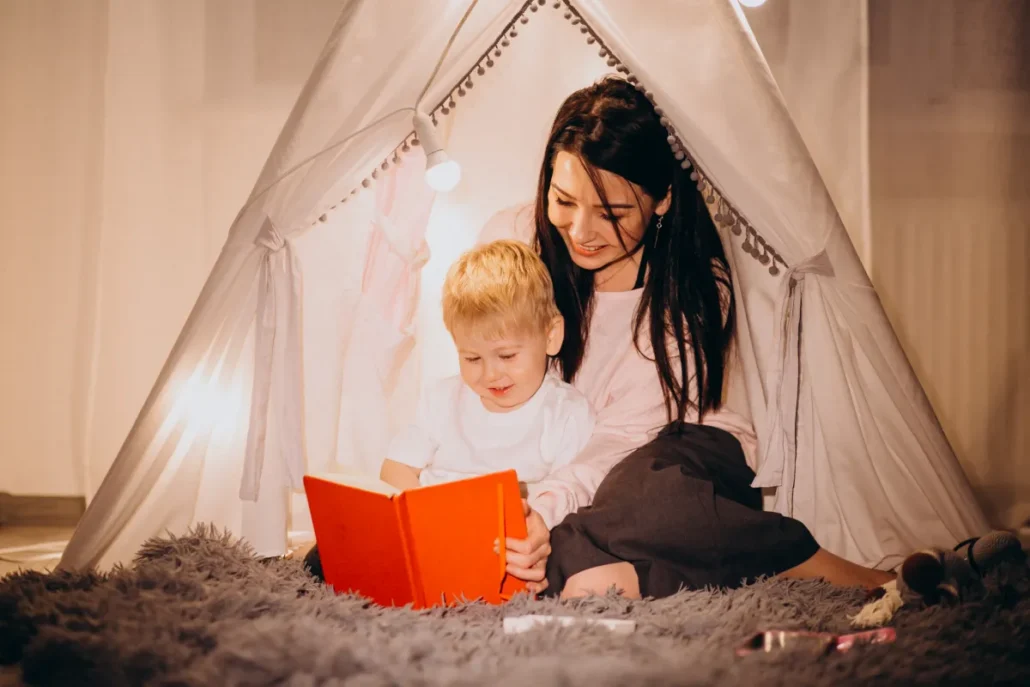
Reading aloud counts, too, and so does an audiobook you listen to together. If there are kids in the house, our companion posts on the best bedtime books for kids and story-based routines for a calmer night turn this same habit into a family ritual. And no book? No problem: make one up together, a sentence each, and pick the story back up the next night where you left off.
When Reading Isn’t Enough
Reading is a wind-down habit, not a treatment. Stress and sleep feed each other in both directions, and sometimes the sleep piece needs more support than a good book can offer.
Caution: If you’re regularly lying awake, waking through the night, snoring loudly, or dragging through your days despite a consistent routine, talk with your healthcare provider.
If stress is the thing keeping you up, our posts on sleeping through stress and sleep anxiety offer gentler starting points.
Worth checking, too: the surface you’re reading on. If your mattress is fighting you every night, no book is going to make up for it and most mattresses are ready for replacement around the seven-year mark. Take the Better Bed Quizzz to Find Your Perfect Mattress!
Here’s to Turning the Page on Restless Nights
You don’t need a new gadget, an app subscription, or a total life overhaul. You need a lamp, a book you like, and fifteen quiet minutes you’re willing to defend.
Start tonight one small change at a time, and let your brain relearn what winding down feels like.
Sweet dreams, and happy reading!
This blog offers general information about sleep and is not meant to replace professional medical advice. Always seek the advice of your physician or other qualified health provider with any questions you may have about your sleep or your health.